



The postman arrives, and the barking begins. Then comes the pacing. A car backfires, and you spend ten minutes calming your dog down. Later that day, you find a loose stool in the garden.
Sound familiar? You might think you have two separate problems: a reactive dog and a dog with a sensitive stomach.
The truth is, you probably have one problem with two different symptoms.
Table of Contents
- The Second Brain in Your Dog's Belly
- The Vicious Cycle of Stress and Diarrhoea
- The Rise of Psychobiotics
- How to Support the Gut-Brain Axis
The Second Brain in Your Dog's Belly
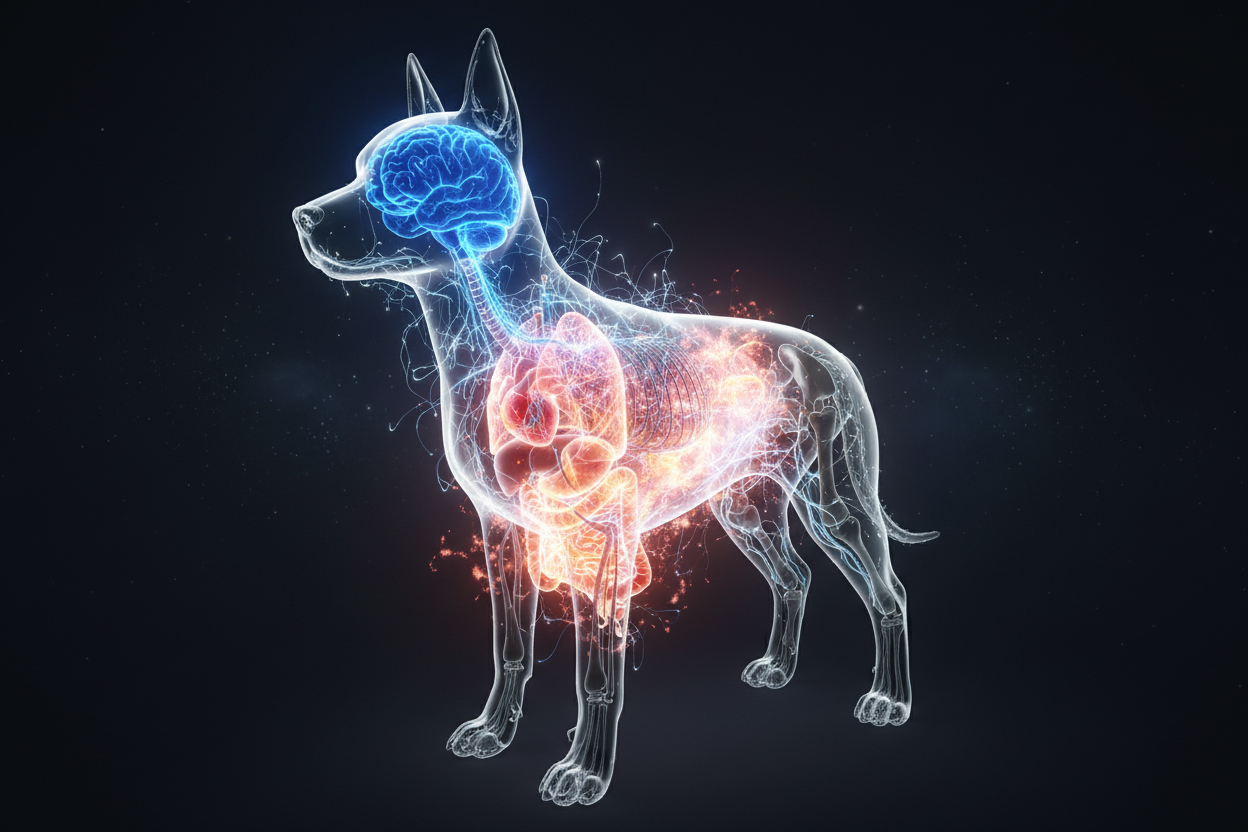
Your dog's gut is lined with millions of nerve cells and home to trillions of bacteria (the microbiome). This ecosystem is so complex and influential that scientists now call it "The Second Brain".
Here's why: Over 90% of the body's serotonin—the "feel-good" neurotransmitter responsible for regulating mood—is produced in the gut, not the brain. The health and diversity of your dog's gut bacteria directly control how much serotonin they can produce.
The gut and the brain are in constant communication via a superhighway of nerves and chemical signals. This is the Gut-Brain Axis.

The Vicious Cycle of Stress and Diarrhoea
This two-way communication system can create a vicious, self-perpetuating cycle:
- Stress Trigger: A loud noise or you leaving the house causes a spike in the stress hormone, Cortisol.
- Gut Reaction: Cortisol wreaks havoc on the gut. It kills beneficial bacteria and can trigger "stress colitis" – acute inflammation leading to diarrhoea.
- Serotonin Crash: With the gut microbiome in disarray, serotonin production plummets.
- Increased Anxiety: With less serotonin, the brain's ability to cope with stress is reduced. The dog becomes even more anxious and reactive.
Your dog is now stuck in a loop: stress causes the bad tummy, and the bad tummy makes the stress worse.
The Rise of Psychobiotics
Recognising this link, scientists have identified specific strains of beneficial bacteria that, when ingested, have a direct, positive impact on mood and behaviour. They've been nicknamed Psychobiotics.
One of the most-studied is Bifidobacterium longum. A landmark study on anxious Labrador Retrievers found that dogs supplemented with this strain showed:
- A significant reduction in stress-related behaviours (barking, pacing).
- Lowered heart rate and cortisol levels during stressful events.
- A more positive, optimistic outlook in cognitive tests.
They didn't just calm the gut; they calmed the mind.
How to Support the Gut-Brain Axis
You can't just give your dog a random probiotic. You need to create an environment where the right kind of bacteria can thrive.
This is where a next-generation yeast complex like The Biome Vitality comes in. It contains key components that support this axis:
- MOS Prebiotics: These act as food for beneficial bacteria like Bifidobacterium, helping them to multiply and dominate the microbiome.
- Beta-glucans: These help to modulate the immune response in the gut, reducing the inflammation caused by stress.
- Nucleotides: The building blocks for rapid gut cell repair, helping to heal a 'leaky gut' caused by stress.
By strengthening the gut lining and feeding the right bacteria, you are directly supporting your dog's ability to produce serotonin and manage stress.
Calm Mind, Calm Tummy
Stop treating the symptoms in isolation. Support the gut-brain axis and see how a healthier gut can lead to a happier, calmer dog.
Scientific Sources
- PMC: The Gut-Brain Axis and the Canine Microbiome
- PubMed: Bifidobacterium longum Reduces Anxiety in Dogs


